Showing posts with label Η Δραστηριότητα Της Κυριακής. Show all posts

Saturday, 20 December 2014

Don't let the pigeon drive the bus! Printable vocabulary memory set.

Here are the additional materials that you can use after or while reading the book Don't Let The Pigeon Drive The Bus!


 These are some of the ways in which you can use the cards:

1. Hand the cards to your child ask them to spot the word in the book. 
2. Give them the Greek word and ask them to find the English one in the book. 
3. Play memory
4. Play Bang
5. Ask them to sort the words into three categories: verb, nouns or adjectives.
6. Rainbow write the words.
7. Write silly sentences.
8. Make word ladders.
9. Make a Word Wall

Book Club: Don't let the pigeon drive the bus!

Don't let the pigeon drive the bus! is one of my favourite books for children, since it addresses many behaviour issues from demanding attitude to anger tantrums. It is the first of many in the series of pigeon adventures. It is funny and witty and perfect for beginner readers. So consider getting one of the Pigeon books for Christmas these holidays, they ensure a good laugh. 


photo via wikipedia 

While you are at it,  click on the book photo to visit the official site and play the games you can find there online. 

Sunday, 7 December 2014

Sight Words Games : Memory Game and Loop Cards Printables

Dolch words are very important to a child learning to read. They are also very hard to teach, because they have to be identified by sight, hence their other names: sight words or high frequency words. Since they make up for the 70-80% of all english printed materials, they are a determining factor for success in reading, especially for beginner learners. 
The following printables are part of the Dolch Word set I have been posting for the past month. 
So go ahead, print, colour and laminate the cards and play with your child or use in class. It is simple, fast and effective. 

Dolch Words Memory Game

Saturday, 6 December 2014

Digraphs Oral Practice

Here are some more fun ways to practice reading digraphs. I found hundreds of videos, so you can use these or find your own online. 

This one is from TurtleDiary.


Digraphs: th Printable Activity Trace and Play Cards

This is the tracing version of the set of words I posted earlier. Print and enjoy. You might want to print the rest of the activity pages.  For the rest of the pages and instructions on how to use them click here.

Teaching Digraphs: th voiced and voiceless Printable Activity

When it comes to phonics, digraphs are one of the most difficult things to teach. It takes alot of practice for a child to learn to identify them, then actually be able to understand the word meaning and finally read them. As teachers we sometimes forget the natural process that is required for our students to produce oral speech. We believe that since we taught something, it must immediately show in our students' output. As most of us know, this is not the case. It takes time and effort for new skills to be internalised to that point, that they can be used by our students.

More specifically, we tend to forget that practice does make perfect and that practice shouldn't necessarily mean controlled writing and reading activities. After discussing this with one of my students' parent, I decided to make a th digraph game to help my students grasp these difficult sounds. It also makes a great Sunday morning game that one can quickly make to play with one's child.  

Saturday, 22 November 2014

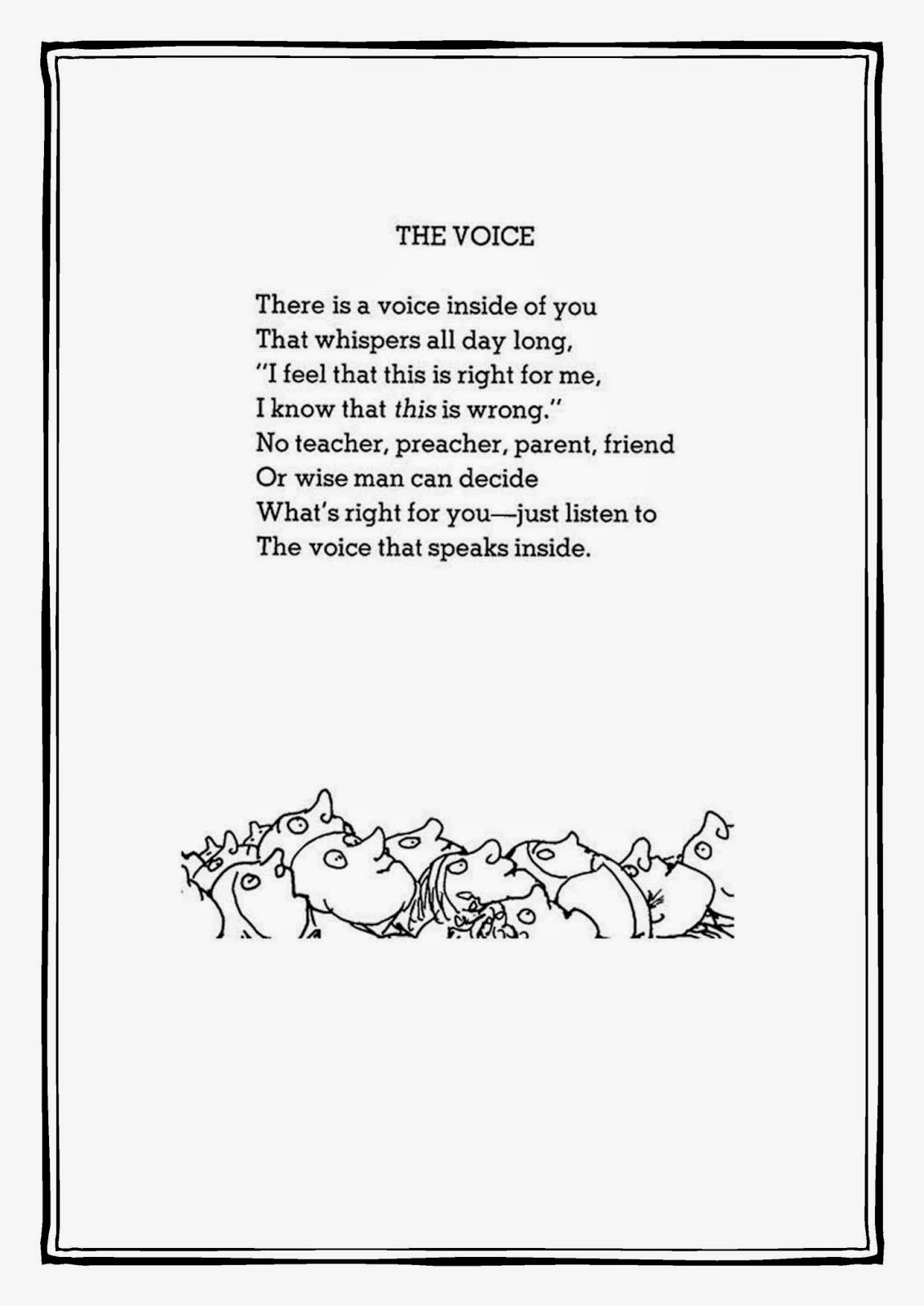
Calligraphy Club: Shel Silverstein Handrwriting Printable Poetry Journal Pages

My love for the poetry of Shel Silverstein cannot be denied by any means. His writing is funny, witty, unconventional and speaks straight through to a child's heart. 

This is another Calligraphy club printable, this time including a few poetry journal pages.  Just print, ink up your pens and write away! 


The voice by Shel Silverstein


Friday, 21 November 2014

Dolch Words Printable Memory Game Group 1b

This is the second group of the first 100 dolch words. Just print two sets of each page and colour them in with your child. Practice reading the words with them.


  • Play memory.
  • Play Bang!
  • Ask them to line them up in alphabetical order.
  • Give them a newspaper or book and ask them to find the dolch words in the text.
  • Make a word wall.
  • Ask them to use them in a sentence. (more advanced)

  • Dolch Words, Printable Memory Game Group 1a

    Sight words, Fry words, high frequency words, dolch words. Call them what you might, sight words are very important for young learners when learning to read. According to linguists they enhance reading skills and fluency and give learners the confidence they need in the target language. The fact that they constitute up to 75% of any written text for children is indicative of their importance. For instance you will be surprised to hear that the ten most frequent words in English are the following:

    1. the 
    2. be 
    3. to
    4. of
    5. and
    6. a
    7. in
    8. that
    9. have
    10. I 

    Monday, 17 November 2014

    Printable Weekly Timetables

    Being organised is a challenge both for children and adults. Here is something that might help! 


    Sunday, 26 October 2014

    Alphabet Printable Board Games: Bang!


    Another simple craft, easy to make and easy to play. I use it to teach the alphabet, vocabulary and irregular verbs to more advanced students. Come to think about it, the ways that one can use this game are endless.


    Materials
    1 box
    paint 
    markers
    cutter
    blank cards

    Instructions

    1. Paint the box whatever colour you like. 


    2. Use your cutter to open a whole in the box. Decorate it whichever way you like. I made mine into another robot!


    3. Prepare your cards. Print, colour and laminate the cards bellow.  You may also want to make your own cards just like I did for the first set I made.


    Click on the pictures and save them to your computer in order to print. 


    I made two sets, one for 2nd graders and one for 3rd. The first set includes words that the children have to recognise and read out loud. The second one includes more difficult tasks, like solving riddles, saying the alphabet by heart, remembering the days of the week or the months, etc. You can also use trivia questions or questions about a book you read with your child. 


    Η Δραστηριότητα της Κυριακής


    • Ο κάθε παίχτης τραβάει ένα φύλλο. Αν μπορεί να διαβάσει την κάρτα την κρατάει, αλλιώς την ξαναρίχνει στο κουτί. Αν τραβήξει κάρτα Bang! χάνει και όλες του οι κάρτες επιστρέφουν στο κουτί. 

    • Για να κάνετε αυτό το παιχνίδι πιο δύσκολο, απλά προσθέστε κάρτες Bang! . 

    • Για περισσότερες κάρτες που μπορείτε να χρησιμοποιήσετε με την κατασκευή αυτή ρίξτε μια ματιά στην κατηγορία Printables

    Sunday, 19 October 2014

    Organise your child! DIY Stand and Printable Weekly Schedule Cards In Greek and English.


    Teaching children how to be organised is always a challenge.  Through the years I came to realise that things that come natural to us can be frustrating for children. Like packing their own school bags for instance. 

    This DIY stand  guides them step by step, so that they pack the correct books for the correct day every single time. It is easy to make, cheap and above all your children will love it. 


    Materials

    1. two pieces of cardboard
    2. washi tape 
    3. markers
    4. printout of the days schedule (see bellow)

    Instructions


    1. Mark the cardboard to make the pocket and the base. 


    2. Put it together with washi tape.


    3. Print the cards, cut them and fill them in with your child. Go through their schedule and write down what they have to pack for every single day. (You can make your own handwritten cards if you want something more personal.)

    GREEK_1

    GREEK_2

    ENGLISH_1

    ENGLISH_2


    Φτιάξτε αυτό το τρισδιάστατο εβδομαδιαίο πρόγραμμα με τα παιδιά σας για να τα βοηθήσετε να οργανώσουν το διάβασμά τους και να μάθουν να φτιάχνουν την τσάντα τους μόνα τους.  


    Αρχικά ίσως να χρειαστεί να το χρησιμοποιείτε μαζί τους, μέχρι να βεβαιωθείτε ότι έχουν καταλάβει τι πρέπει να κάνουν.

    Saturday, 11 October 2014

    Shel Silverstein's Homework Machine in the EFL Classroom!


    Who wouldn't want a Homework Machine? Shel Silverstein's poem depicts the frustration all of us have felt at least once in their lives. What if you could actually build one and use it at home with your child or even better in class with your students?

    The endeavour is grand but the solution is simple. All you need is a shoe box - or a simple card box-, a cutter and a lot of imagination. I made this Homework Robot to use with my students in class within an hour and believe me Serious Grammaticus, as his name is, became an instant hit among all ages. 

    This is how you can make one of your own. 


    Materials:

    1. card box (a shoe box is the easiest way)
    2. cutter 
    3. glue
    4. markers
    5. blank cards 
    6. thin cardboard 

    Instructions:

    1. Cut two holes on the front of the box, one on the top (input hole) and on the bottom (output). Make them large enough for the blank cards to fit.  


    2. On the inside of the box, make a cardboard pathway connecting the input hole to the output hole. Make the short one first then the longer one. Glue them in place. 


    3. Decorate the box whichever way you like. I made mine into a robot, Serious Grammaticus!


    4. Prepare your cards. One the front side of the card write the questions. On the back side write the answers. The cards will instantly flip when you drop them into the INPUT hole and come out with the answer face up!


    Uses:

    You can use the Homework Machine in many different ways. 

    1. Math
    addition cards
    tables
    subtraction
    multiplication
    division

    2. Language arts
    parts of speech recognition
    plurals
    persons (my brother and I= we, Helen=she,etc.)
    irregular verbs
    spelling: Correct your teacher, error identification
    vocabulary translation 
    dolch words

    Do spend the time making the Homework Machine with your child, I assure you you are going to have a blast. If you do find the time please send me a picture, I would love to see what you came up with!

    Η Δραστηριότητα της Κυριακής 

    Ο Serious Grammaticus, το ρομπότ που μας βοηθάει να μαθαίνουμε παίζοντας, είναι μια εύκολη κατασκευή που μπορείτε να φτιάξετε με το παιδί σας στο σπίτι. Στην τάξη μπορείτε να τον χρησιμοποιήσετε με πολλούς και διάφορους τρόπους, για να διδάξετε από μαθηματικά, γλώσσα (μητρική ή ξένη), ακόμα και ιστορία. Το πιο σημαντικό είναι να δείξετε στα παιδιά σας ότι η φαντασία μπορεί να μεταμορφώσει ακόμα και το πιο βαρετό γραμματικό φαινόμενο σε παιχνίδι. 


    Sunday, 14 September 2014

    DIY Literacy and Numeracy Games Tutorial

    Alphabet Games: Easy DIY Games to Make and Play with your child!


    Another school year has started and once again I found myself in need for some new literacy and numeracy manipulatives. I prefer making them myself instead of buying them for a number of reasons. To begin with, if I make them myself they are exactly what I want and what my students need. The next factor is affordability. Simple and cheap materials that can be replaced easily are the best and can be found in almost every household. Finally, I love crafting and the children like the fact that someone spent hours and hours making something for them. 
    Above all children love to make things and use them to learn. They also love spending creative time with us. So find some time to play and create something with your child while helping them to learn and grow. 

    Today I made two very simple game sets, one for teaching the alphabet (lower and upper case) and one for numbers 1-10. I used my Sizzix machine but if you don't have one, just use a circle punch or scissors. 


    1. Alphabet Match

    Materials:
    • cardboard
    • watercolours 
    • permanent marker
    • small box


    Process:

    1. Cut circles out of the cardboard. I cut 26 for the lower case letters and 26 for the upper case.


    2. Using your permanent marker write down the letters of the alphabet on the circles.

    3. Turn the circles the other way round and colour some of them red, some blue, some green and some yellow. 


    4. Decorate your box to make it more appealing. I made mine  using a template I found online and decorated it with washi tape. 


    Playing Instructions:


    1. Ask your children to sort the circles into two piles, one for lower and one for upper case letters.

    2. Ask them to order the letters from a to z or backwards. 

    3. Ask them to match the upper case to the lower case letters. 

    4. Ask them to pick a letter at random then find an object in the room that begins with it, or draw an item that begins with it. 

    5. Ask the children to turn them colour face up and play memory

    6. Ask the children to turn them colour face up and count the blue ones. Repeat for the rest of the colours. 

    7. Use the circles for sequencing. 

    2. Number Tower


    Materials

    • ten toilet roll tubes
    • glue
    • watercolours or decorative paper
    • scissors
    • permanent marker
    • adhesive labels (optional)
    • cardboard tags (many)
    • nine cardboard circles (larger than the tube)


    Process:

    1. Paint or cover the toilet roll tubes with decorative paper.

    2. Write the numbers 1-10 onto the adhesive labels and stick them on the tubes. 

    3. Write the numbers on the tags, or just use dots to represent them. I also pierced holes onto some of them for a Montessori touch! 


    Playing instructions:

    1. The children line up the tubes from one to ten.

    2. They tower up the tubes using the cardboard disks in between each tube for stability. 

    3. Sorting Game: The children pick a cardboard tag, count the dots or read the number and place it into the correct tube.