Showing posts with label Printable. Show all posts

Sunday, 15 February 2015

Music In the Classroom. Bob Dylan Printable Lesson Plan


Motivation is a key concept in learning foreign languages. My motivation as a language learner was, and still is, music and literature, which I desperately wanted to be able to understand in the language in which they were written. When the time came to choose my dissertation topic for my MSc it was clear to me that music in ESL classrooms should be my focus. The bibliography was almost as sparse as my mood was rotten while I wrote it. No one wants their student years to be over and relocating back to my home country was not a prospect I was looking forward to. Poring over hundreds of song lyrics in order to find appropriate songs, my conviction that music promotes language acquisition became stronger and remains with me today.

Saturday, 20 December 2014

Don't let the pigeon drive the bus! Printable vocabulary memory set.

Here are the additional materials that you can use after or while reading the book Don't Let The Pigeon Drive The Bus!


 These are some of the ways in which you can use the cards:

1. Hand the cards to your child ask them to spot the word in the book. 
2. Give them the Greek word and ask them to find the English one in the book. 
3. Play memory
4. Play Bang
5. Ask them to sort the words into three categories: verb, nouns or adjectives.
6. Rainbow write the words.
7. Write silly sentences.
8. Make word ladders.
9. Make a Word Wall

Sunday, 7 December 2014

Sight Words Games : Memory Game and Loop Cards Printables

Dolch words are very important to a child learning to read. They are also very hard to teach, because they have to be identified by sight, hence their other names: sight words or high frequency words. Since they make up for the 70-80% of all english printed materials, they are a determining factor for success in reading, especially for beginner learners. 
The following printables are part of the Dolch Word set I have been posting for the past month. 
So go ahead, print, colour and laminate the cards and play with your child or use in class. It is simple, fast and effective. 

Dolch Words Memory Game

Saturday, 6 December 2014

Digraphs: th Printable Activity Trace and Play Cards

This is the tracing version of the set of words I posted earlier. Print and enjoy. You might want to print the rest of the activity pages.  For the rest of the pages and instructions on how to use them click here.

Teaching Digraphs: th voiced and voiceless Printable Activity

When it comes to phonics, digraphs are one of the most difficult things to teach. It takes alot of practice for a child to learn to identify them, then actually be able to understand the word meaning and finally read them. As teachers we sometimes forget the natural process that is required for our students to produce oral speech. We believe that since we taught something, it must immediately show in our students' output. As most of us know, this is not the case. It takes time and effort for new skills to be internalised to that point, that they can be used by our students.

More specifically, we tend to forget that practice does make perfect and that practice shouldn't necessarily mean controlled writing and reading activities. After discussing this with one of my students' parent, I decided to make a th digraph game to help my students grasp these difficult sounds. It also makes a great Sunday morning game that one can quickly make to play with one's child.  

Saturday, 22 November 2014

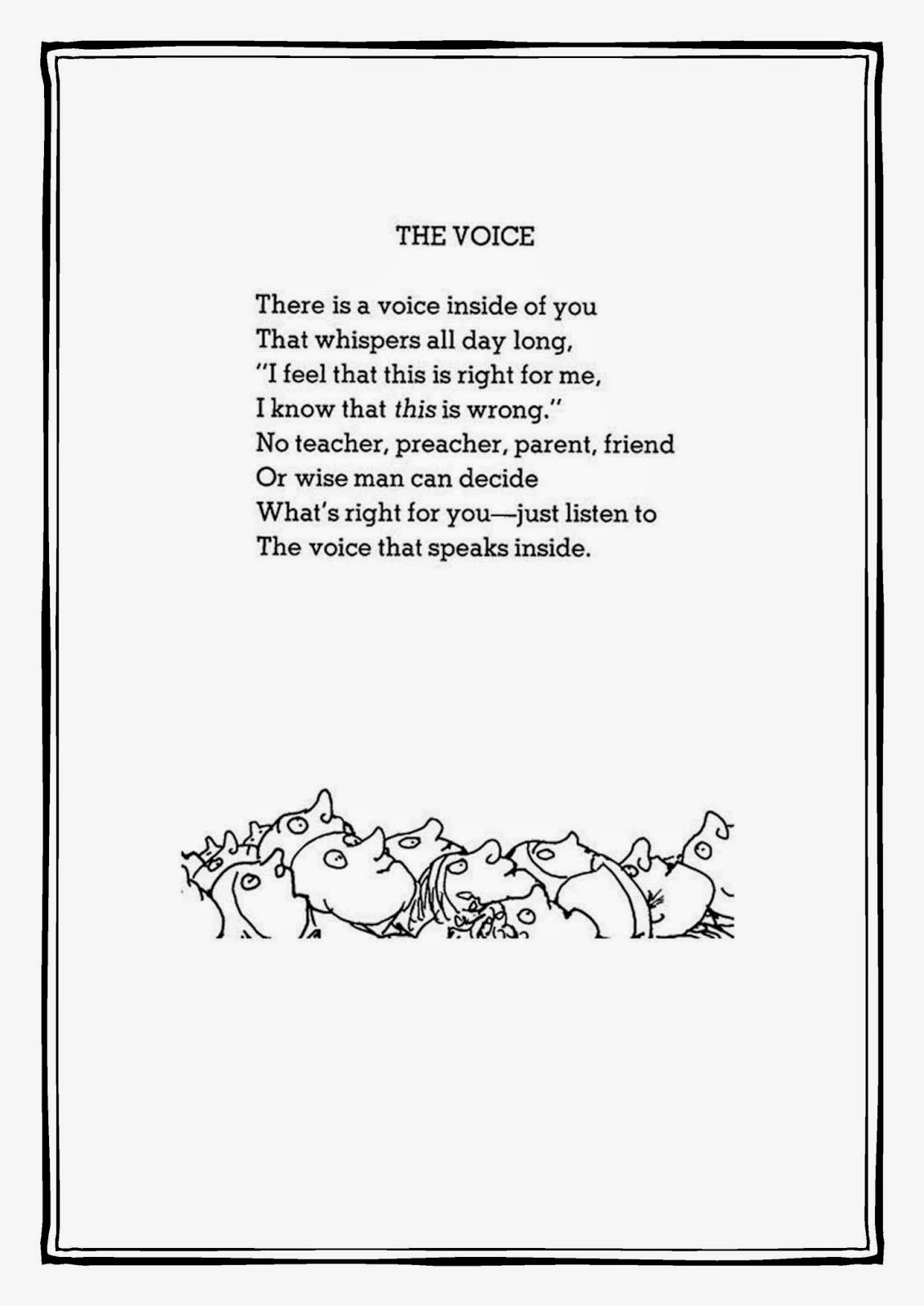
Calligraphy Club: Shel Silverstein Handrwriting Printable Poetry Journal Pages

My love for the poetry of Shel Silverstein cannot be denied by any means. His writing is funny, witty, unconventional and speaks straight through to a child's heart. 

This is another Calligraphy club printable, this time including a few poetry journal pages.  Just print, ink up your pens and write away! 


The voice by Shel Silverstein


Calligraphy Club: Handwriting Worksheet - Christina Rossetti Printable

 Another Calligraphy Club Printable, this time featuring a children's poem by Christina Rossetti. 


Christina Rossetti by her brother.
Photo via Wikipedia


The Rainbow 
by Christina Rossetti

Friday, 21 November 2014

Dolch Words Printable Memory Game Group 1b

This is the second group of the first 100 dolch words. Just print two sets of each page and colour them in with your child. Practice reading the words with them.


  • Play memory.
  • Play Bang!
  • Ask them to line them up in alphabetical order.
  • Give them a newspaper or book and ask them to find the dolch words in the text.
  • Make a word wall.
  • Ask them to use them in a sentence. (more advanced)

  • Dolch Words, Printable Memory Game Group 1a

    Sight words, Fry words, high frequency words, dolch words. Call them what you might, sight words are very important for young learners when learning to read. According to linguists they enhance reading skills and fluency and give learners the confidence they need in the target language. The fact that they constitute up to 75% of any written text for children is indicative of their importance. For instance you will be surprised to hear that the ten most frequent words in English are the following:

    1. the 
    2. be 
    3. to
    4. of
    5. and
    6. a
    7. in
    8. that
    9. have
    10. I 

    Monday, 17 November 2014

    Calligraphy Club: Printable Handwriting Practice Sheets with a Poetic Twist!


    I' ve been using fountain pens since primary school and I have come to realise that those writing instruments have shaped the way I write. 


    To begin with, as one of my students once told me, fountain pens are like toothbrushes, they are very personal. They adjust the ink flow to the writer's writing angle and pace, and they don't require any pressure, which means that one is able to write in a fluent motion. This means that the fatigue caused by writing for a long time is minimised. Moreover, fountain pens cater for both left-handed and right-handed students, not only because of the adjustable ink flow. Many brands have issued fountain pens for children that offer both left-handed and right-handed grips. 


    One of the most difficult things to teach a child learning to write is how to hold their pen properly. Fountain pens adress that issue, too. If you don't hold the pen correctly, the ink flow is obstructed and the pen won't write. In other words the writer is "taught" by the pen how to hold it correctly in order for him or her to be able to write. 


    Using fountain pens increases motivation to write. Many of my students actually HATE writing. A large number of them believe that their handwriting is horrible and that there is no way to fix that. Using fountain pens reshapes this belief, since it helps them transform the appearence of their writing within a couple of weeks. It gives students the satisfaction that they have accomplished something they thought was beyond their reach. 


    You don't have to spend a fortune in order to buy your child a fountain pen. As a matter of act I advise you not to. There are plenty of quality fountain pens in the market that range from 1,50 to 10 euro and are especially made for children. I also advise that you buy cheap bottled ink to refill the pen. It is cheaper and eco friendly. You might also want to invest in a fountain pen correction pen that will last the whole school year.

    So you made your trip to the fountain pen store and got your child a pen... Now what? There are many websites that offer handwriting practice sheets that you can use. I for once prefer to make my own, not only because I can choose the font but I can also play around with the content. In order to help my students get familiarised with poetry and songs that I love, I use poems and songs for my handouts. I have also bought a cheap calligraphy notebook that I give to the students that finish early. 

    Here is the first calligraphy handout I made for my calligraphy club, featuring a poem by one of my favourite poets: Shel Silverstein. Print and enjoy. There will be more soon. 


    Printable Weekly Timetables

    Being organised is a challenge both for children and adults. Here is something that might help! 


    Sunday, 26 October 2014

    Alphabet Printable Board Games: Bang!


    Another simple craft, easy to make and easy to play. I use it to teach the alphabet, vocabulary and irregular verbs to more advanced students. Come to think about it, the ways that one can use this game are endless.


    Materials
    1 box
    paint 
    markers
    cutter
    blank cards

    Instructions

    1. Paint the box whatever colour you like. 


    2. Use your cutter to open a whole in the box. Decorate it whichever way you like. I made mine into another robot!


    3. Prepare your cards. Print, colour and laminate the cards bellow.  You may also want to make your own cards just like I did for the first set I made.


    Click on the pictures and save them to your computer in order to print. 


    I made two sets, one for 2nd graders and one for 3rd. The first set includes words that the children have to recognise and read out loud. The second one includes more difficult tasks, like solving riddles, saying the alphabet by heart, remembering the days of the week or the months, etc. You can also use trivia questions or questions about a book you read with your child. 


    Η Δραστηριότητα της Κυριακής


    • Ο κάθε παίχτης τραβάει ένα φύλλο. Αν μπορεί να διαβάσει την κάρτα την κρατάει, αλλιώς την ξαναρίχνει στο κουτί. Αν τραβήξει κάρτα Bang! χάνει και όλες του οι κάρτες επιστρέφουν στο κουτί. 

    • Για να κάνετε αυτό το παιχνίδι πιο δύσκολο, απλά προσθέστε κάρτες Bang! . 

    • Για περισσότερες κάρτες που μπορείτε να χρησιμοποιήσετε με την κατασκευή αυτή ρίξτε μια ματιά στην κατηγορία Printables

    Sunday, 19 October 2014

    Organise your child! DIY Stand and Printable Weekly Schedule Cards In Greek and English.


    Teaching children how to be organised is always a challenge.  Through the years I came to realise that things that come natural to us can be frustrating for children. Like packing their own school bags for instance. 

    This DIY stand  guides them step by step, so that they pack the correct books for the correct day every single time. It is easy to make, cheap and above all your children will love it. 


    Materials

    1. two pieces of cardboard
    2. washi tape 
    3. markers
    4. printout of the days schedule (see bellow)

    Instructions


    1. Mark the cardboard to make the pocket and the base. 


    2. Put it together with washi tape.


    3. Print the cards, cut them and fill them in with your child. Go through their schedule and write down what they have to pack for every single day. (You can make your own handwritten cards if you want something more personal.)

    GREEK_1

    GREEK_2

    ENGLISH_1

    ENGLISH_2


    Φτιάξτε αυτό το τρισδιάστατο εβδομαδιαίο πρόγραμμα με τα παιδιά σας για να τα βοηθήσετε να οργανώσουν το διάβασμά τους και να μάθουν να φτιάχνουν την τσάντα τους μόνα τους.  


    Αρχικά ίσως να χρειαστεί να το χρησιμοποιείτε μαζί τους, μέχρι να βεβαιωθείτε ότι έχουν καταλάβει τι πρέπει να κάνουν.

    Saturday, 29 September 2012

    Vocabulary That Sticks For Advanced Learners

    One of the most demanding tasks our students undertake is to learn new words. With younger learners we mostly focus on picture-word association, but when it comes to advanced learners, this may not be applicable.What is more, we often ask our students to memorise words with abstract meaning, that is not often found in simple contexts. My university  professors used to claim that people cannot easily memorise new vocabulary, unless they find it in context, however this is not always easy to provide. I have encountered this problem as a teacher numerous times, especially while preparing students for Cambridge exams like FCE and CPE, as well as with my 6th grade students. I think I have found the answer in a combination of traditional as well contemporary approach to teaching vocabulary. Literature and technology are a killer combination.


    Literature

    I have always been a fun of reading, not only because I find it a great way to spend one's time, but I have also come to appreciate its educational value. Once more I try to bring my love for books in my teaching, and I have come to realise it actually works. It provides the necessary context for the vocabulary to be understood and retained. It also provides a lot of variety of new words, that are introduced in a pleasurable way.

    This year I am hooked on mystery chapter books. They remind me of endless nights staying up reading my books to the last page to find out who the culprit was. I am also somewhat of a retro fan, so I have started re reading my Enid Blyton collection. After that I am going to bury my teeth into Nancy Drew novels and probably the Boxcar Children. I am also planning to recommend them to my students. They are teenage novels, relatively easy to read while providing a challenge, and they have a mystery to solve. I have started making the materials I am going to use along with the books. 
    I am using a sample paragraph from Enid Blyton's The Secret Island to show you how I do this. 

    sample paragraph


    The three children listened, their eyes wide with astonishment. An island on the big lake! Oh, if only they could really go there and hide - and live by themselves - with no unkind aunt and uncle to slap them and scold them and make them work hard all day long!
    “Are you too tired to walk down the lakeside to a place where you can see the island?” asked Jack. “I only found it quite by chance one day. The woods come right down to the lakeside opposite the island, and they are so thick that I don’t think anyone has ever been through them, and so no one can have seen my island!”
    “Jack! Jack! Take us to see your secret island!” begged Nora. “Oh, we must go. We’re all tired - but we must, must see the secret island.”
    “Come on, then,” said Jack, pleased to see how excited the others were. “Follow me. It’s a good way.”


    After the students read a chapter, they have to fill in a new words form. I provide them with a dictionary that they can use to do that. Looking things up in a dictionary, printed or online, is a basic study skill.


    See-Cover_Copy_Word_List
     In order to make it more appealing for them, I try to involve them in as much sleuthing as I can. This is why I have made a Mystery Case File,that the children have to fill in as real detectives. This includes main list of characters, suspects, evidence and clues. 

    Mystery Case File Cover
    Χρηστίνα Τσιαγκλή

    Technology

    I know that students prefer spending time online rather than reading a book. In order to accommodate that I have opened a Spelling City account. In this account my students can find word lists from our lessons, and practice on them. I use this account for my FCE and CPE candidates as well as my other students. Unfortunately I haven't got a premium account, but maybe one day I will. 
    Have a look at the current lists I have added:


    Saturday, 1 September 2012

    Back To School: 2nd Grade Starter Packs

    The summer of 2012 is gone. It has been a weird summer for many of us, and it must be said that I welcome the New School Year with somewhat of a relief. Getting back to business, settling down and enjoying the familiarity of day in - day out routine. Before I come to that though, I must undergo the sometimes painful stage of last year's evaluation. I make a point of writing down my plan for every year. Then somewhere in mid July, I read through it and decide what to keep and what to throw away for next year. Now that this process is over, I can finally get down to business and start preparing my materials for next year.
    When it comes to second grade I am almost ready, as I am not planning to change much from last year. Most of the techniques I tried worked out fine. I am adjusting some things though and I am introducing others. 

    • One of the things I am definitely keeping is my Class Rules. Class rules should be a few, so the children can memorise them easily. They also must be simple and concise. The class rules I am using are the following:


    a. Always raise your hand to speak. 
    Photo via Discovery Education
    Classroom rules 

    b. Don't talk when someone else is talking. 
    Photo via Discovery Education 
    Classroom rules 
    c. Keep your work and space tidy.

    Photo via Discovery Education
    Classroom rules 

    d. Thinking caps on! Always come prepared to learn. 
    Photo via Discovery Education
    Classroom rules   
    e. Treat others the way you want others to treat you.


    Classroom rules

    I compiled these pictures in one chart that I give the children every year. These are ready to be printed out, the moment I find out the number of students I am going to have this year. 


    • The second thing I am keeping is my custom made alphabet chart. This is also printed out and given to the children for the purpose of reference. 

    Alphabet chart that I give out
     to my students in Hill School.
    Copyrighted material. 


    • The above two materials are used in the children's nameplates. Their nameplates are simple A3 pieces of thin cardboard. The children write their names and draw a picture of themselves on one side. The other side contains the class rules and the alphabet chart. We use the nameplates to get a quick lesson start. The moment we get in class the children have to grab their name plates and find their seat. Each child gets a sticker when they seat and raise their hands. The nameplate also helps them define their working space, so we don't have arguments about desk space. When we do exercises the children can easily refer to the alphabet chart on the nameplate without opening books and notebooks. It also helps when it comes to class management, cause the children have the rules before them at all times and we can easily remind ourselves. 


    • Last year I also used writing samples, in order to give the children a sense of progress. In the beginning of each semester I gave out a name practice chart that the children filled in. This also helps to identify cases of dysgraphia and be able to help the child from the beginning. 


    1st Semester Writing Sample
    Σχολή Χιλλ

    Second Semester writing sample.
    It is evident how much this child has improved! 


    This year I am thinking of taking it a step further: 
    Name Writing Practice Sample

    • One new thing I am going to try this year is a homework portfolio, so the children as well as the parents at home, know exactly what they have to do to prepare for the next lesson. I am still working on it, so I am going to show you only a few sample pages. 


    Homework Portfolio Sample
    Ctsiagli (c)
    Σχολή Χιλλ 

    Homework Portfolio Sample
    Ctsiagli (c)
    Σχολή Χιλλ 


    These are some of the things I am definitely using this year. I hope they work as well as they did last year. Every time I get allocated a new class of students, I try to keep an open mind. Some materials work like charm every time, others need changing and others don't work at all. What I try to do is start with a chore plan and then adjust as I go. 

    To see what we did with second grade last year follow the links below:

    Beginner Level 


    Class Books and Readers

    Games